Source gardening work gloves for Gardening, Pet Care, and Cleaning
Find 30 options for gardening work gloves featuring anti-scratch and anti-static functions. Buyers can compare models with nylon, latex, or polyester materials and CE EN388 certifications for various industrial and household tasks.
Key considerations
Products List


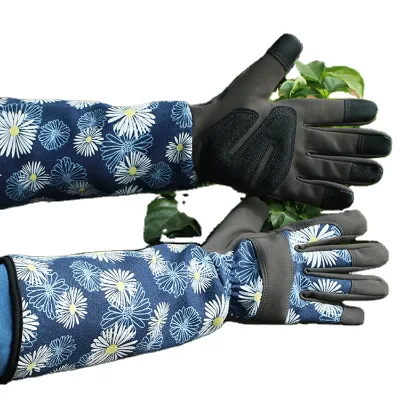


Comprehensive Sourcing Guide
Strategic Sourcing Guide for Gardening Work Gloves
Understanding Technical Specifications and Material Composition
When sourcing gardening work gloves, the primary objective is to identify products that balance durability with dexterity. The market offers a diverse array of configurations, and buyers must carefully distinguish between different material compositions to match specific operational needs. Based on current market observations, the outer materials for these gloves vary significantly, with common options including Nylon, Latex, Nitrile, and Polyester.
The choice of outer material directly influences the glove's performance characteristics. For instance, some listings indicate a combination of Nylon and Latex, which often provides a balance of flexibility and grip. Other variations feature a pure Latex outer material or a Nitrile coating, which is frequently selected for its superior resistance to oils and chemicals compared to standard latex. A distinct category of gloves utilizes a 100% Polyester shell, often paired with a latex crinkle coating. This specific construction, noted in some product models, is designed to offer enhanced abrasion resistance while maintaining breathability.
Beyond the outer shell, the liner material plays a crucial role in comfort and fit. Buyers should verify whether the liner is constructed from Polyester or Nylon. The thickness of the coating is another critical specification; "Thickened" coatings are often observed in products designed for heavy-duty gardening tasks where protection against thorns and sharp debris is paramount. Conversely, thinner coatings may be preferred for tasks requiring high tactile sensitivity. The length of the glove is typically categorized as "Medium," providing adequate wrist protection without restricting movement. Additionally, the cuff tightness is often specified as "Tight," ensuring that dirt and debris do not enter the glove during vigorous activity.
Compliance Standards and Certification Verification
In the industrial and commercial procurement of safety equipment, verifying compliance with recognized standards is non-negotiable. For gardening work gloves, the primary benchmark is the EN388 standard, which evaluates mechanical risks such as abrasion, blade cut, tear, and puncture resistance. Market data indicates that many suppliers claim adherence to CE EN388 standards, with specific test result codes such as 4121 or 2121 appearing in product specifications. These numerical codes represent the glove's performance rating across different test parameters, where higher numbers indicate better protection.
Buyers must exercise caution when interpreting these certifications. While some product listings explicitly state "Certificate CE EN388 4121" or "Certificate CE EN388 2121," others may simply list "CE EN388" without providing the specific performance digits. It is essential to request the actual test report from the supplier to confirm that the specific model being ordered has undergone the rigorous testing required to earn the stated rating. Relying solely on a general "CE" mark without the accompanying EN388 performance data is insufficient for verifying mechanical protection levels.
Furthermore, while ISO 9001 is a common quality management standard, it should not be confused with product-specific safety standards. The presence of an ISO 9001 certification in a supplier's background does not guarantee that a specific batch of gloves meets the EN388 requirements. Buyers should prioritize suppliers who can provide direct evidence of the EN388 test results for the specific product model, such as HCD015, HNN349, or HNL245, rather than relying on general company certifications.
Cost Drivers and Pricing Dynamics
The pricing of gardening work gloves is influenced by a complex interplay of material costs, manufacturing complexity, and order volume. Observed market data reveals a significant price variance, with unit costs ranging from approximately $0.07 to $6.47. This wide disparity is not arbitrary but reflects differences in material quality, coating thickness, and the level of customization required.
The most significant cost driver is the outer material. Gloves featuring Nitrile or specialized Latex coatings generally command higher prices than those with basic Polyester shells. The thickness of the coating also impacts the cost; "Thickened" gloves require more raw material and often involve more complex manufacturing processes, leading to a higher unit price. Additionally, the complexity of the liner and the specific knitting gauge, such as the "13 gauge" noted in some specifications, can influence production costs.
Order volume is another critical factor in determining the final price. The Minimum Order Quantity (MOQ) varies widely, ranging from as low as 10 pairs to as high as 24,000 pairs. Suppliers often offer tiered pricing structures where the unit cost decreases as the order volume increases. For example, a buyer ordering 6,000 pairs may face a different price point than one ordering 1,000 dozens. Buyers should be aware that the "One Doz Per Polybag" or "12 pairs/Bag" packing configurations can also affect logistics costs, which may be factored into the overall price. Understanding these variables allows buyers to negotiate more effectively and align their procurement strategy with their budget constraints.
Typical Applications and Functional Requirements
Gardening work gloves are designed to serve a broad spectrum of applications, extending beyond simple plant care to include general industrial and household tasks. The functional requirements for these gloves are diverse, necessitating features such as anti-scratch, anti-static, and anti-puncturing capabilities. These functions are essential for protecting hands from thorns, sharp branches, and rough surfaces commonly encountered in gardening environments.
The versatility of these gloves is evident in their listed usage scenarios. While "Gardening" is the primary application, many models are also suitable for "General Work," "Pet Care," and handling "Household Electrical Appliances." Some specifications even extend the utility to "Automotive Assembly," "Maintenance," and "Wood Industrial" tasks. This multi-functionality suggests that a single type of glove can often serve multiple departments within an organization, simplifying inventory management.
The "Dual-Use for Dry and Wet" attribute is particularly valuable for gardening tasks that may involve watering plants or working in damp soil. Breathability is another key feature, ensuring that hands remain comfortable during extended periods of wear. The "Non-Disposable" nature of these gloves indicates they are designed for repeated use, which is a cost-effective solution for long-term procurement. Buyers should match the specific functional attributes, such as "Anti-Scratch" or "Anti-Static," to the specific hazards present in their work environment to ensure optimal protection.
Supplier Evaluation and Operational Logistics
Selecting the right supplier involves more than just comparing product specifications; it requires a thorough evaluation of the supplier's operational capabilities and logistical reliability. Geographic origin is a key factor, with many suppliers located in regions such as Zhejiang and Gaomi City in China. These regions are known for their manufacturing expertise in protective gear, but buyers should verify the specific production capabilities of each supplier.
Logistical terms are critical for managing the supply chain effectively. Standard trade terms often include FOB, CFR, and CIF, which define the responsibilities of the buyer and seller regarding shipping and insurance. The loading port is frequently specified as Qingdao Port, a major hub for Chinese exports. Buyers must understand these terms to calculate the total landed cost accurately.
Lead times and payment terms are also essential considerations. Typical delivery times may range from 20 to 30 days after the order is confirmed. Payment structures often require a 30% deposit with the remaining 70% due before shipment. These terms are standard in the industry but should be clearly agreed upon in the contract to avoid disputes. Additionally, the packing specifications, such as "240 pairs/Carton" or "10 bag/CTN," must be verified to ensure they align with the buyer's storage and distribution requirements.
Quality Control and Long-Term Procurement Strategy
Implementing a robust quality control (QC) strategy is vital for maintaining the integrity of the supply chain. Given the variations in materials and specifications, buyers should establish clear acceptance criteria before production begins. This includes verifying the material composition, checking the thickness of the coating, and ensuring the glove meets the claimed EN388 performance ratings.
Long-term procurement considerations involve building a sustainable relationship with suppliers who can consistently deliver high-quality products. Buyers should look for suppliers who offer customization options, as this allows for tailoring the gloves to specific brand or operational needs. The availability of different colors, such as Blue, Yellow, or Custom Colorful options, can also be a factor in branding and visibility on the job site.
To mitigate risks, buyers should conduct regular audits and request samples for independent testing. This ensures that the gloves continue to meet safety standards and performance expectations over time. By focusing on technical specifications, compliance, and supplier reliability, buyers can secure a steady supply of high-quality gardening work gloves that protect their workforce and support their operational efficiency. The ability to navigate the complexities of MOQs, pricing tiers, and logistical terms will ultimately determine the success of the procurement strategy.
FAQs
What materials are used for gardening work gloves?
Gardening work gloves are commonly made from Nylon, Latex, Nitrile, or Polyester. Some models feature a Nylon and Latex combination, while others use a 100% Polyester shell with a latex crinkle coating for enhanced abrasion resistance.
Which certification standards do these gloves meet?
Many models comply with the CE EN388 standard, with specific test result codes like 4121 or 2121 indicating protection levels. Buyers should verify the specific test report for the model to confirm mechanical risk ratings.
Can I find gloves with anti-static and anti-scratch functions?
Yes, these gloves offer anti-scratch, anti-static, and anti-puncturing functions suitable for gardening and general work. They are designed to protect hands from thorns, sharp branches, and rough surfaces encountered during various tasks.
What is the typical minimum order quantity for these gloves?
The minimum order quantity ranges from 10 pairs up to 24,000 pairs depending on the supplier and model. Specific models may require 6,000 pairs or 1,000 dozens, so buyers should check individual product listings for exact thresholds.
How long does delivery take after order confirmation?
Delivery typically takes 20 to 30 days after the order is confirmed. This lead time applies to standard production cycles and may vary based on the specific supplier's capacity and current order volume.
Where are these gardening work gloves manufactured?
These gloves are manufactured in China, with specific origins noted in Zhejiang and Gaomi City. Buyers should verify the exact production location when evaluating suppliers for logistics and quality control purposes.